The Faculty of Arts and Science is one of Indonesia’s leading schools of
arts and science recognized for the quality of its programs, originated from excellence
in humanities, sciences, and social sciences. We offer a premier educational experience
that reflects the educational innovation to solve today’s challenges, making our
graduates the most competitive in Indonesia.
Through an interdisciplinary approach, Faculty of Arts and
Science creates future leaders in the field of Humanity and Science with
strong moral characters and internationally competitive skill sets to
contribute to the Indonesian development of human well-being.

Interdisciplinary Studies Build Critical Thinking Skills!
The U.S. model of higher education emphasizes a broad base of interdisciplinary coursework, plus the skills to connect the disciplines for advanced study and real-world application. The core curriculum includes humanities, communication, mathematics, science, and social science which are relevant to any major, and build skills in critical thinking, problem solving, and creativity.
Learn more about the core curriculum →Relevant Academic Programs
Curriculum that Meets International Standards
Instruction by Expert Faculty
Technology-Enhanced Teaching and Learning
Small Class Sizes
English as the Language of Instruction

Dr. Augustina Sulastri, Psikolog
Dean of Faculty of Arts & Science
Doctor of Philosophy (Ph.D), Radboud
University Nijmegen (The Netherlands)
Founder and President, the Indonesian Neuropsychological Association (2024-2028)

Dr. Ade Iva Murty, M.Si.
Dean of FAS
Doctor of Social Psychology, Universitas Indonesia, Certified Trainer for Maternal and Neonatal Health

Andi Tri Supratno Musrah, Ph.D.
Head of Psychology
Doctor of Clinical Neuropsychology, University of Sydney
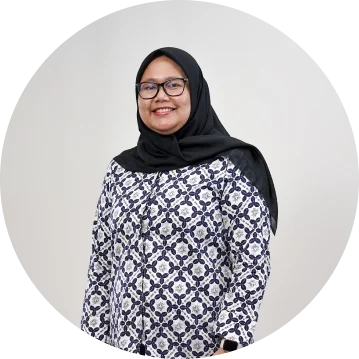
Tika Endah Lestari, S.Pd., M.Si.
Head of General Education
Magister in Mathematics and Statistics, Bandung Institute of Technology

Iwan Setiawan, B.Sc., Ph.D.
Head of Centre of Research and Community Services
Doctor of Philosophy in Analytical Chemistry, Michigan State University

Dr. Desyarti Safarini, S.Pd., M.Si.
Head of CETL
Doctor in Mathematics Education, Universitas Pendidikan Indonesia
Dr. Ade Iva Murty, M.Si.
Psychology Lecturer
Doctor of Social Psychology, Universitas Indonesia, Certified Trainer for Maternal and Neonatal Health
Andi Tri Supratno Musrah, Ph.D.
Psychology Lecturer
Doctor of Clinical Neuropsychology, University of Sydney
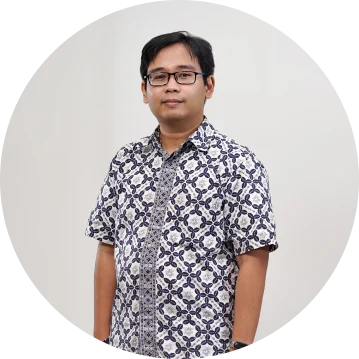
Dr. Ilham Prasetyo, M.Si.
General Education Lecturer
Doctor in Physics, Universitas Indonesia

Deshinta Puspa Ayu Dwi Argaswari, M.Pd.
General Education Lecturer
Magister in Mathematics Education, Universitas Sebelas Maret

Faradillah Haryani, S.Pd., M.Sc.
General Education Lecturer
Master of Science in Mathematical Modelling, University of Birmingham

Caesilia Ika Widanti, S.Psi., M.Psi.
Psychology Lecturer
Magister of Educational Psychology, University of Indonesia

Siti Shaliha, S.Pd., M.Psi.T.
Psychology Lecturer
Magister of Applied Psychology, Universitas Indonesia

Eunike Mutiara, S.Psi., M.Psi., Ph.D.
Psychology Lecturer
Doctor of Philosophy in Social Psychology, The University of Queensland

Kharisa Hasna Utami, S.Psi., M.Sc.
Psychology Lecturer
Master's Degree in Neuroscience and Education, University of Bristol

Muhammad Lukman Baihaqi Alfakihuddin, S.Si., M.S.
General Education Lecturer
Master Degree in Environmental Resource Management, Florida Institute of Technology, Florida, USA.

JeanMarie Bianchi
Associate Professor of Practice
Faculty Advisor, Undergraduate Psychological Science
B.A. Psychology & U.S. History, SUNY
Albany
(2009)
M.A. Clinical Psychology, University of Missouri: St. Louis (2011)
Ph.D. Psychology, University of Arizona (2016)

Alma Tejeda Padron
Assistant Professor of Practice, Psychology
Ph.D. Psychology, University of Arizona (2025) - Social & Personality Psychology program

May 21, 2025
On February 26, 2025, the Developmental Psychology course at Sampoerna University featured a guest l....

May 14, 2025
On June 7, 2024, students from Sampoerna University’s Psychology Department took part in a meaning....

May 09, 2025
At Sampoerna University, learning goes beyond the classroom. On May 27, 2024, students from various ....
More Info



Explore the complex world of the mind and brain!
Advancing Psychology for a Healthy Indonesia
The American University of Indonesia - Psychology Study Program is
committed to
cultivating a deep understanding of human behaviour, mental health, and social dynamics
to support the development of a healthy and flourishing Indonesian society. Rooted in
the principles of health psychology, the program equips students with the
knowledge and
skills to explore how psychological factors influence physical health, emotional
resilience, and community well-being. By integrating research, practice, and community
engagement, the program empowers future psychologists to become agents of
change—supporting Indonesia’s progress toward a more resilient, inclusive, and mentally
healthy society.
In 2027, it will become a study program that creates graduates of
psychology with competency in Health Psychology, who could contribute
knowledge and skills to national and international Society.


With a Psychology degree from American University of
Indonesia,
graduates can pursue careers as:
Psychologist Assistant
Social Worker
School Counselor
Human Resources Specialist
Marketing Specialist
Behavioral Researcher
Organizational Consultant


Dr. Ade Iva Murty, M.Si.
Psychology Lecturer
Doctor of Social Psychology,
Universitas
Indonesia,
Certified
Trainer for Maternal and Neonatal
Health
Andi Tri Supratno Musrah,
Ph.D.
Psychology Lecturer
Doctor of Clinical Neuropsychology,
University
of
Sydney
Caesilia Ika Widanti, S.Psi.,
M.Psi.
Psychology Lecturer
Magister of Educational Psychology,
University of Indonesia
Siti Shaliha, S.Pd., M.Psi.T.
Psychology Lecturer
Magister of Applied Psychology,
Universitas Indonesia
Kharisa Hasna Utami, S.Psi.,
M.Sc.
Psychology Lecturer
Master's Degree in Neuroscience
and Education, University of
Bristol
Eunike Mutiara, S.Psi., M.Psi.,
Ph.D.
Psychology Lecturer
Doctor of Philosophy in
Social
Psychology, The University of
Queensland
JeanMarie Bianchi
Associate Professor of Practice
Faculty Advisor, Undergraduate
Psychological Science
B.A. Psychology & U.S. History,
SUNY
Albany (2009)
M.A. Clinical Psychology, University of
Missouri: St. Louis (2011)
Ph.D. Psychology, University of Arizona
(2016)
Alma Tejeda Padron
Assistant Professor of
Practice,
Psychology
Ph.D. Psychology, University of
Arizona
(2025) - Social & Personality Psychology
program
The Faculty of Education aims to accelerate the educational transformation in Indonesia and beyond to meet the 21st century challenges. We offer curricula that place an emphasis on multidisciplinary approaches, new technologies, reflective and research skills, and theory-practice integration. FOE programs are designed to produce transformative educators with a passion for lifelong learning, and with a commitment to rethink teaching and redesign learning for current and future learners.
High Rates of Employment in Prestigious Schools and Organizations
Because of FOE's emphasis on applying education theory to real-world practice, many of our graduates have multiple job offers prior to graduation. Our graduates have earned a reputation for excellence and teach in National, National Plus, and International Schools in Indonesia. Our alumni are passionate lifelong learners. Many have pursued further studies and received prestigious international scholarships.
Relevant Academic Programs
The School Experience Program (SEP)
Applied Capstone Projects
New Learning Technologies
Small Class Sizes
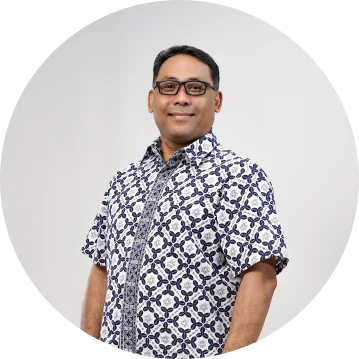
Dr. Christianus I Wayan Eka Budiartha, S.Pd., M.A.
Dean of Faculty of Education
Ph.D in Applied Linguistics, Atma Jaya Catholic University, Cert. TESOL Trinity
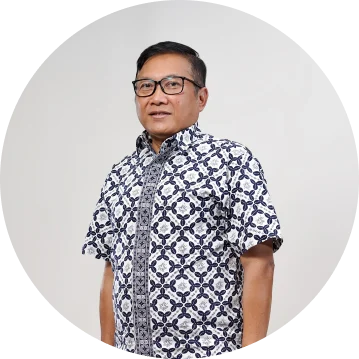
Dr. Soepriyatna, S.Pd., M.Pd.
Director of QAIRP
Ph.D in Applied Linguistics, Atma Jaya Catholic University
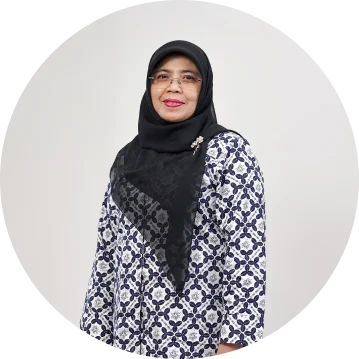
Susilowaty, S.E., M.A.
Head of English Language Education Study Program
Master's in TESOL, Southern Illinois University, Interim Head of English Language Education
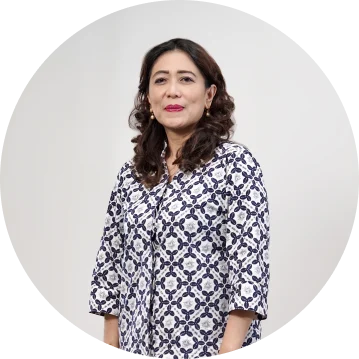
Dr. Vera Syamsi, S.Pd., M.Hum.
English Language Education Lecturer
Ph.D in Humanistic Studies, University of Indonesia

Maria Niayu Risma Novianti, S.Pd., M.A.
English Language Education Lecturer
Master's in American Studies, Gadjah Mada University

Julia Frances Lonan, B.A., M.A.
English Language Education Lecturer
Master's in Communication, Emerson College
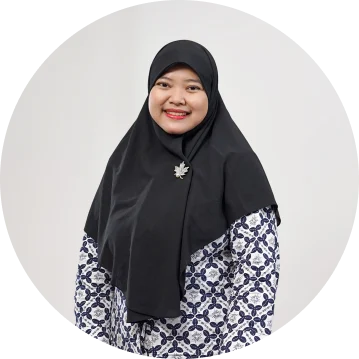
Faradillah Haryani, S.Pd., M.Sc.
English Language Education Lecturer
Master's in Mathematics Education, University of Bristol

Anissa Pane, M.A.
Microteaching Lab Coordinator
Master's in Education (innovation in Learning and Teaching), University of South Wales



FoE graduates can be absorbed by national and international schools (i.e. SIS Pantai Indah Kapuk, Sekolah Cikal, Green School Bali, HighScope Indonesia) with mostly less than 6 months waiting time after the graduation. Moreover, the graduates' employment is aligned with the graduate profile of FoE.
May 21, 2025
On February 26, 2025, the Developmental Psychology course at Sampoerna University featured a guest l....
May 14, 2025
On June 7, 2024, students from Sampoerna University’s Psychology Department took part in a meaning....
May 09, 2025
At Sampoerna University, learning goes beyond the classroom. On May 27, 2024, students from various ....
More Info

Shaping World-Class English Educators Through Experiential Learning.
The Bachelor of Education in English Language Education program is designed to fulfill Indonesia's critical need for exemplary English teachers by integrating experiential learning as the core of its educational approach. Our program moves beyond theory, immersing prospective educators in contemporary pedagogical practices and curriculum design while developing their skills for teaching diverse grade levels. Through this hands-on methodology, which is further enriched by technology integration and community service engagements, we cultivate educators who excel in 21st-century classrooms. Graduates emerge not only with global competitive skill sets but also with the strong moral character and lifelong learning mindset needed to lead and enhance the quality of English language education across Indonesia.
To become a leading English Language Education Study Program that creates educators who excel in English language pedagogy through an experiential learning approach and are equipped with strong moral characters and global competitive skill sets.
A Bachelor of Education who possesses 21st-century skills,
knowledge in the field of English language education, and has strong academic abilities.
They play a role in the educational-related industry by integrating technology,
information, and communication (ICT) literacy based on the principles of experiential
learning, which makes them lifelong learners and reflective practitioners.
FoE's graduates are future leaders who are passionate about lifelong learning and transforming education, with strong abilities in interdisciplinary thinking and new technologies, who have great skills and enthusiasm in teaching, be of good moral fibre, and be willing to contribute to the transformation of the society.
FoE graduates will possess the following competencies:


Educators (K-12 Teachers)
Technology specialist in Education
Curriculum developer, Academic
coordinator
Writers and/or Editors
Trainers in education and corporation
(HRD)
Translator and/or interpreter
Learning media developer
Spokesperson/PR
Edupreneur
Demonstrate comprehensive knowledge of English language systems
(linguistics, sociolinguistics) and master contemporary teaching
methodologies, curriculum design, and assessment strategies for diverse
learners in K-12 settings.
Design, implement, and evaluate technology-enhanced learning
experiences by utilizing digital tools and platforms to create engaging,
effective, and accessible English language instruction.
Apply the principles of experiential learning through continuous cycles of action, reflection, and adaptation in real-world teaching and training contexts, fostering a growth mindset as a lifelong learner.
Develop, critique, and manage coherent educational programs, syllabi, and learning materials that are aligned with learning objectives, national standards, and specific institutional needs.

Communicate effectively and persuasively in English for
academic, professional, and public contexts, demonstrating the leadership
and collaborative skills necessary to guide teams, manage projects, and
represent organizations.

Apply advanced bilingual skills to perform accurate translation
and interpretation tasks, and to produce clear, grammatically flawless
written content for various media and purposes.

Identify opportunities within the education sector, develop
viable business or project plans, and manage resources effectively to launch
and sustain educational initiatives or services.
FoE's graduates are future leaders who are passionate about lifelong learning and transforming education, with strong abilities in interdisciplinary thinking and new technologies, who have great skills and enthusiasm in teaching, be of good moral fibre, and be willing to contribute to the transformation of the society.
FoE graduates will possess the following competencies:
Microteaching Lab

Anissa Pane, M.A.
Microteaching Lab Coordinator
Master's in Education (innovation
in Learning and Teaching), University
of
South Wales
Faradillah Haryani, S.Pd., M.Sc.
English Language Education Lecturer
Master's in Mathematics Education,
University of Bristol
Julia Frances Lonan, B.A., M.A.
English Language Education Lecturer
Master's in Communication, Emerson
College
Maria Niayu Risma Novianti,
S.Pd., M.A.
English Language Education
Lecturer
Master's in American Studies, Gadjah
Mada University
Dr. Vera Syamsi, S.Pd., M.Hum.
English Language Education
Lecturer
Ph.D in Humanistic Studies,
University of Indonesia
Bachelor of Education in English Language Education program is committed to create a new generation of teachers who pursue their careers in a wide array of opportunities in the field of English Language Education.
They will be able to teach English as a second language at different levels of primary and secondary schools and at different contexts including in formal and non-formal education settings such as in tutoring programs and youth centers. With the ability to use English as the medium of instruction and global perspective of learning, they have significant strengths to teach in international-oriented schools with students from various backgrounds.
The capacity in conducting educational research and developing educational programs will allow graduates to take part in education development projects and pursue their careers in national and international developmental agencies or non-government organizations.
Learn from world-class faculty, connect with a global
network,
and gain practical skills that prepare you for a successful
career.
©2026 THE AMERICAN UNIVERSITY OF INDONESIA. ALL RIGHTS RESERVED
*formerly Sampoerna University, subject to approval by the relevant authority.